Government At Fault For Housing Crisis

In a recent report, the National Housing Federation stated, "that the housing crisis is not the fault of greedy developers or buy to let investors, but that it"s due to poor government policy and a lack of a co-ordinated housing strategy to work out how to put a roof over people"s heads."
With 15 housing ministers in the past 20 years, the average tenure is just 16 months - perhaps not surprising that no government during that period has done anything in this sector other than to make it worse.
According to the construction products association, ministerial positions with a higher churn rate than the manager of the England football team (11 since 1997) are not uncommon.The portfolio covering construction has changed hands 14 times, there have been 15 Chief Secretaries to the Treasury and the similarly political hot potato of immigration has been taken on by 12 ministers in the last 20 years. As a fairly junior ministerial position (based on size of budget) Housing is used as a training / testing ground for MP's new to ministerial office or a 'broadening experience' to widen the skill base of existing ministers.
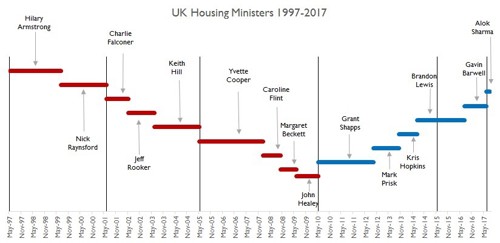
This may be good in ensuring those that make it to high office are rounded and experienced, but it has the downside that those civil servants tasked with enacting government policy probably spend more time explaining what it was and discussing whatever 'great idea' the new encumbent has to 'make their mark' than they do actually doing anything.
Anyway - getting back to the NHF report, they are suggesting a fresh housing settlement is required to provide a place to live for everyone. This includes:
- The homeless
- Private tenants paying extortionate rent
- Children not able to leave the family home
- Couples delaying having children due to unsuitable living conditions
To meet the shortfall and cater for future demand, England needs 340,000 homes per year until 2031, much higher than existing estimates and above the government target of 300,000 per annum. However, just building the requisite number of homes without due consideration being given to the type of housing needed will not fix anything.
The research shows that, of the 340,000, 145,000 new homes need to be affordable - almost double previous affordable housing estimates of 78,000.
This means about 40% of new homes built each year should be classed as affordable; in 2016/17 less than a quarter actually were.
The research precisely breaks down what variety of homes are required:
- 90,000 should be for social rent
- 30,000 should be for intermediate affordable rent
- 25,000 should be for shared ownership
The government announced the upcoming social housing green paper following the Grenfell disaster last June and promised a "fundamental rethink" of social housing across the nation.
The National Housing Federation (NHF), and other major players in the social sector, are imploring the government to use the opportunity to address the huge shortage of social housing properly.
In September 2017, Theresa May promised £2 billion to invest in affordable housing, but research shows this would deliver less than 10% of necessary social rented homes.
- The government must make comprehensive reforms to deliver more homes and make up the shortfall;
- Government should prioritise the sale of public land for social housing and look at ways to reduce the cost of private land.
The NHF recognises that it will take time to build up a sufficient affordable housebuilding programme. However, it is argued that with the necessary government backing, councils and housing associations will be able to increase the supply of social rented homes and low cost housing for those wanting to buy.
After the Second World War and into the 1970s, councils often built upwards of 100,000 houses each year but funding for social housing has been falling for many years:
- In 1975/76 social housing investment was over £18 billion a year;
- From 1975/76 to 2015/16 the housing benefit bill rose from £4 billion per year to £24.2 billion;
- In 2015/16 social housing investment was just £1.1 billion a year, but more was paid in housing benefit, typically to the private sector
- Rough sleeping has risen 169% since 2010;
- Households in temporary accommodation are set to reach 100,000 by 2020 as it stands.
David Orr, chief executive of the National Housing Federation, said:
 David Orr
"This groundbreaking new research shows the epic scale of the housing crisis in England. The shortfall of homes can't be met overnight - instead, we need an urgent effort from the Government to meet this need, before it publishes its social housing green paper in the summer.
"The green paper will set out the Government"s approach to tackling a number of key issues, like stigma of social housing tenants. However, it is clear that many of these stem from a chronic underinvestment in affordable housing. Fixing this should be the Government's top priority. As a first step, ministers should make the £2 billion they promised for social rent available immediately.
"The Government must also totally change the way it sells surplus land. The priority here must be supporting developments that will deliver a public good on public land, rather than simply selling it off to the highest bidder."
Campbell Robb, chief executive of the independent Joseph Rowntree Foundation, said:
"It is unacceptable that currently in our society millions of people are locked out of being able to afford a decent and secure home. For years our failure to deliver enough affordable housing in England has led to rising levels of poverty and homelessness across our country. Now is the time to redesign our housing market so that it works for everyone - no matter who they are or where they come from. That"s why it is crucial the Government seizes the opportunity offered by the Social Housing Green Paper to deliver the genuinely affordable homes we desperately need."